Tools Needed: water, push pin, Phillips screwdriver, cloth/towel
Watch:
Step-By-Step Instructions:
STEP 1: Check the Chemicals Used
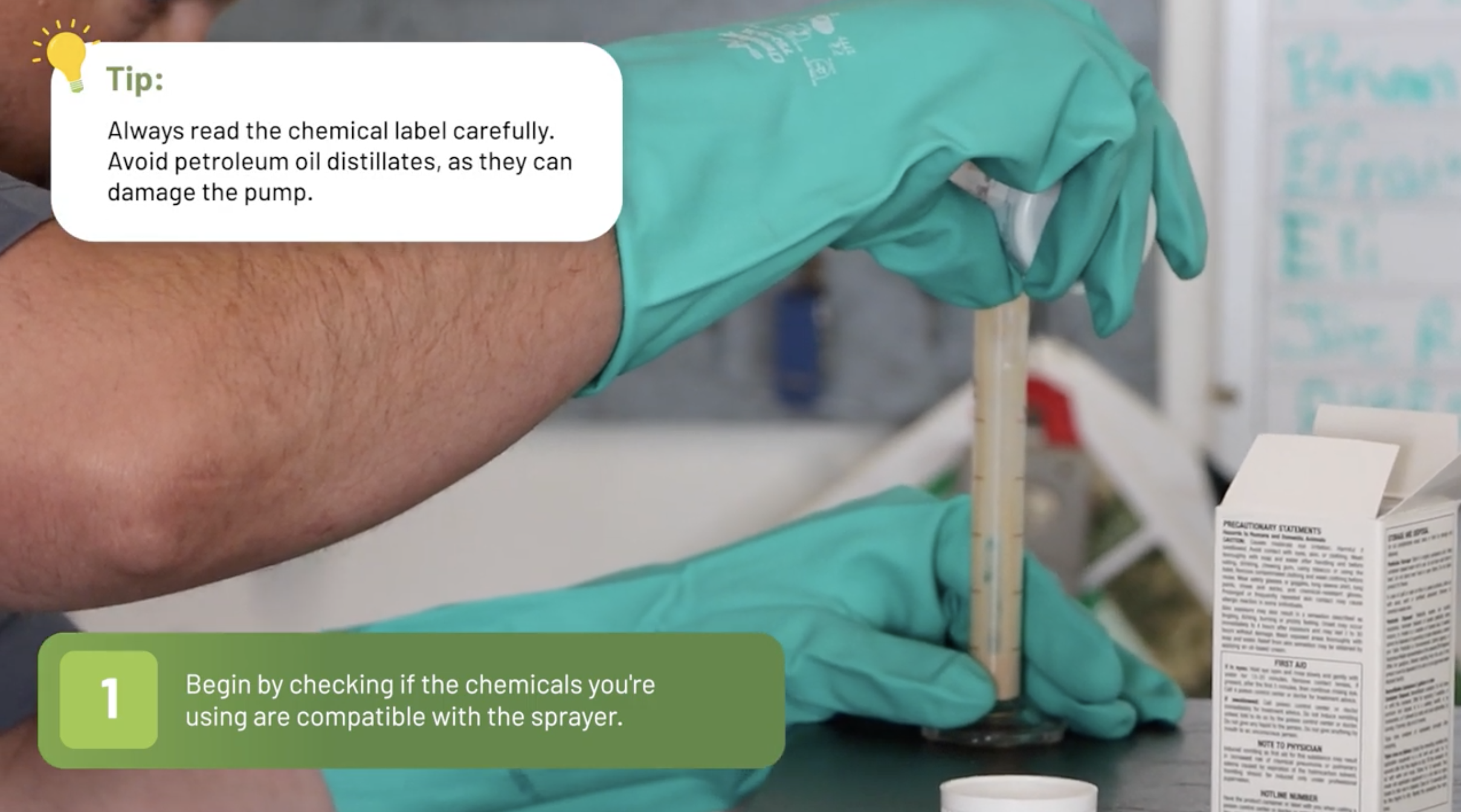
Check the chemical labels and make sure all the solutions are compatible with the sprayer
Note: Ingredients such as petroleum oil, distillates, and essential oils will break down the seals in your sprayer leading to damage
STEP 2: Inspect the Nozzles for Clogs
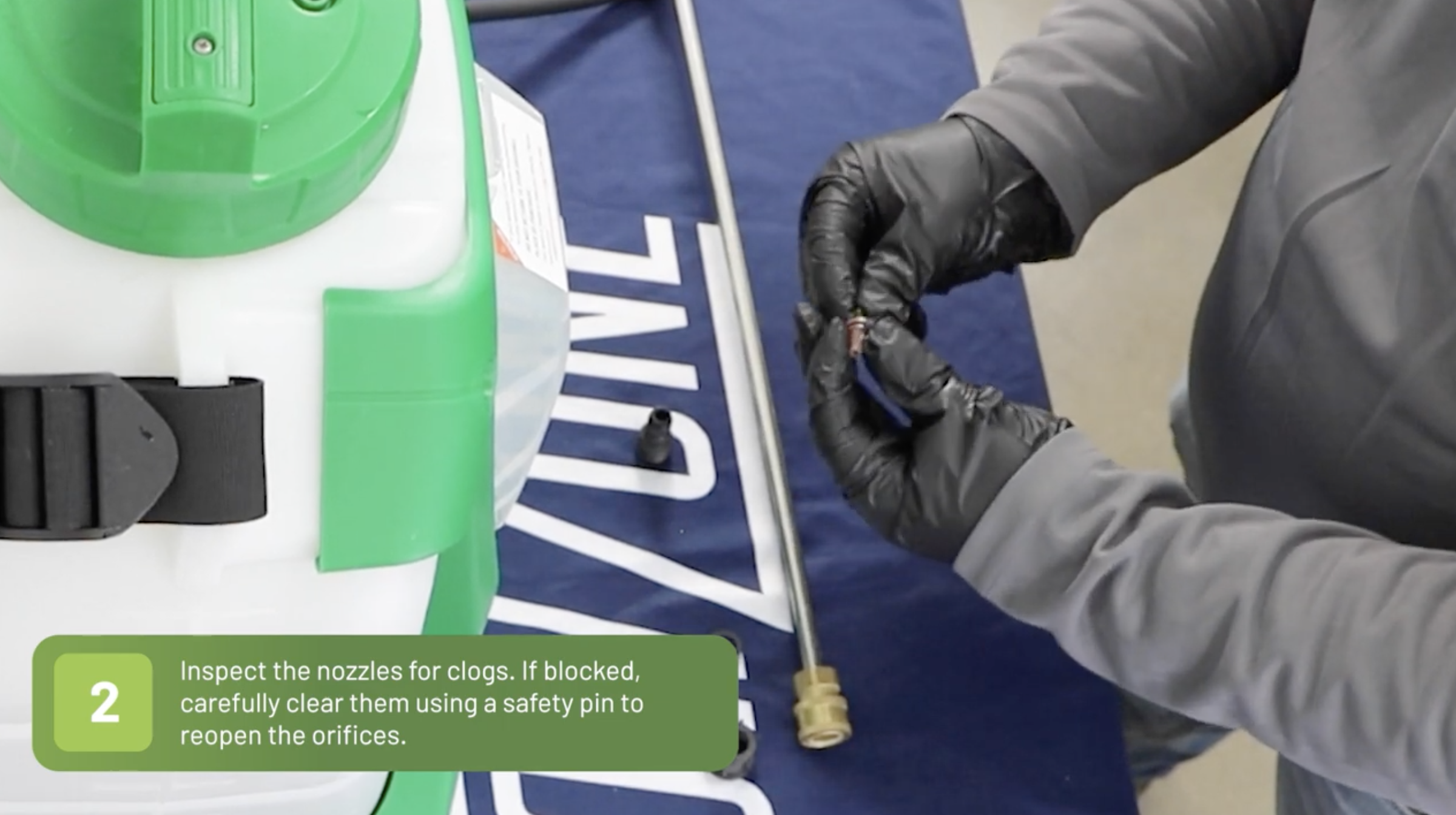
Remove the nozzle tips and check for any debris. If there is buildup, clear it with a push pin.
STEP 3: Check the Inlet Filter
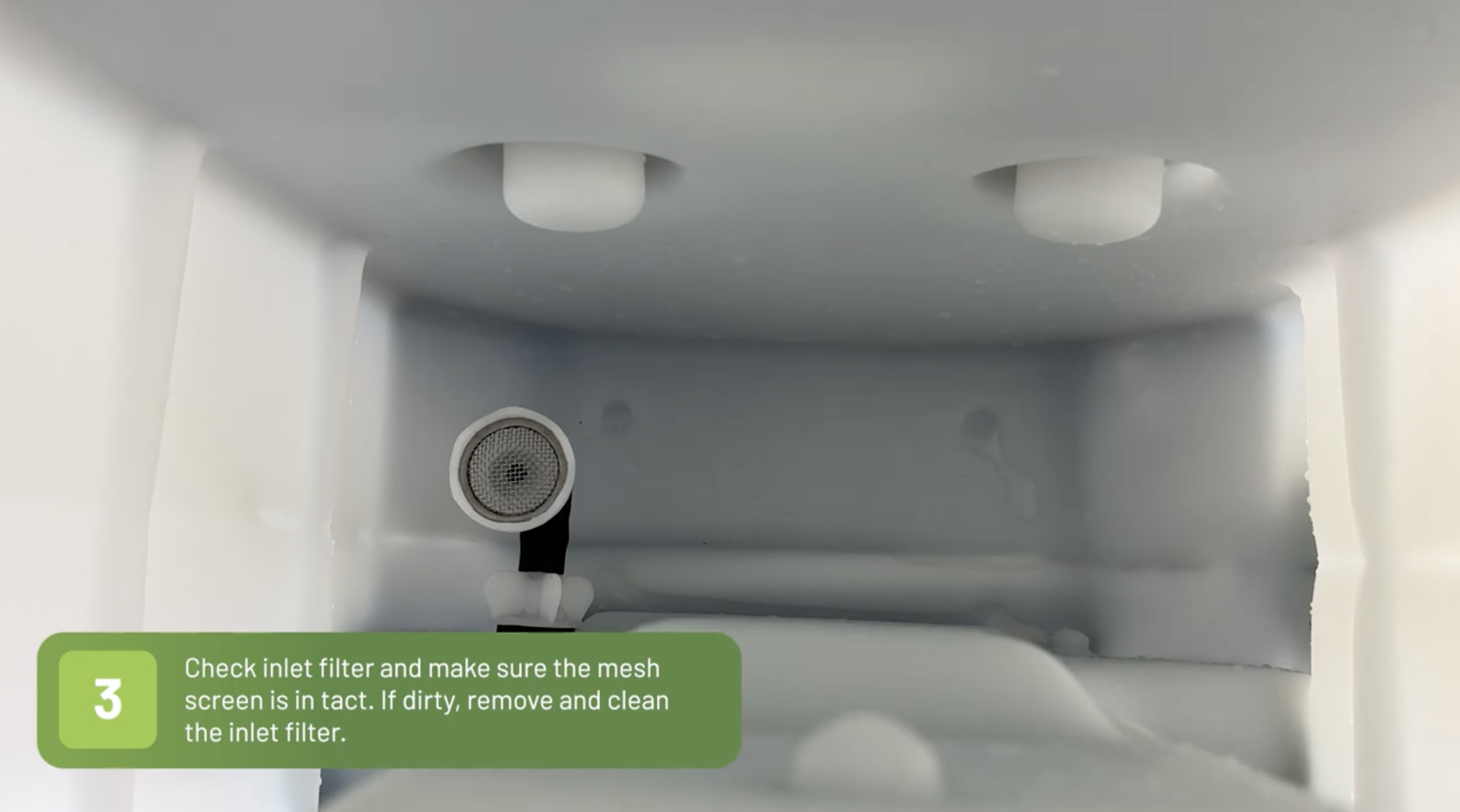
a. Locate the inlet filter at the bottom of the tank. Turn the filter up towards the tank opening and make sure the mesh filter screen is present.
b. If there is debris on the filter screen, remove the inlet screen holder and rinse it under fresh water.
c. Wipe off the mesh screen with a clean cloth.
d. Reinstall the inlet filter screen.
Note: Make sure the inlet filter screen is turned to face the bottom of the tank.
STEP 4: Check the Interior Jumper Hose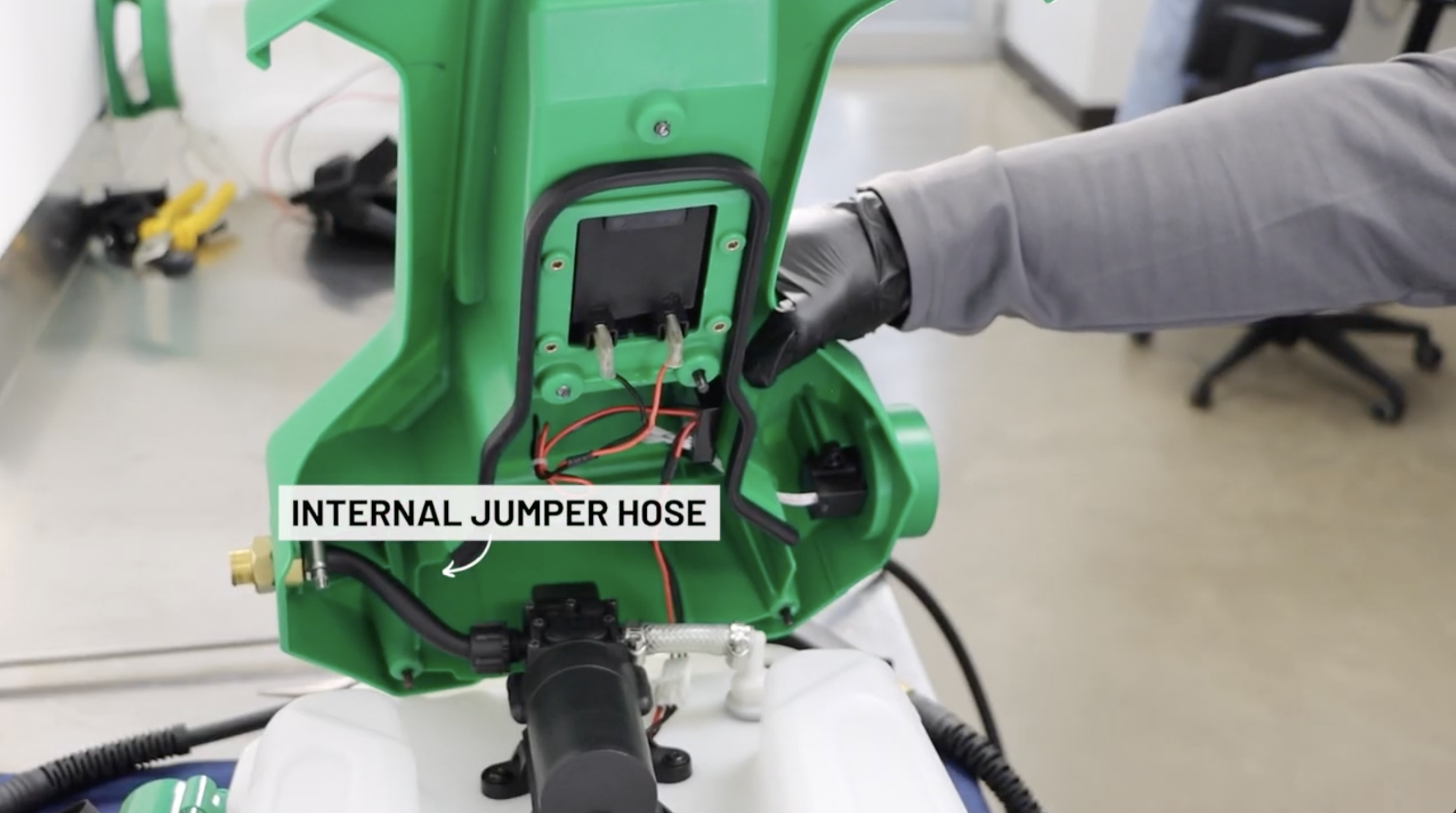
a. Using the Phillips screwdriver, remove the seven screws on the front cover plate and open the sprayer up.
b. Locate the interior jumper hose by the diaphragm pump and make sure the hose is not crimped or twisted in any way. If the jumper hose is twisted. it must be replaced (for instructions, see under Part Replacements, "Exterior and Internal Hose").
STEP 2: Close the Sprayer
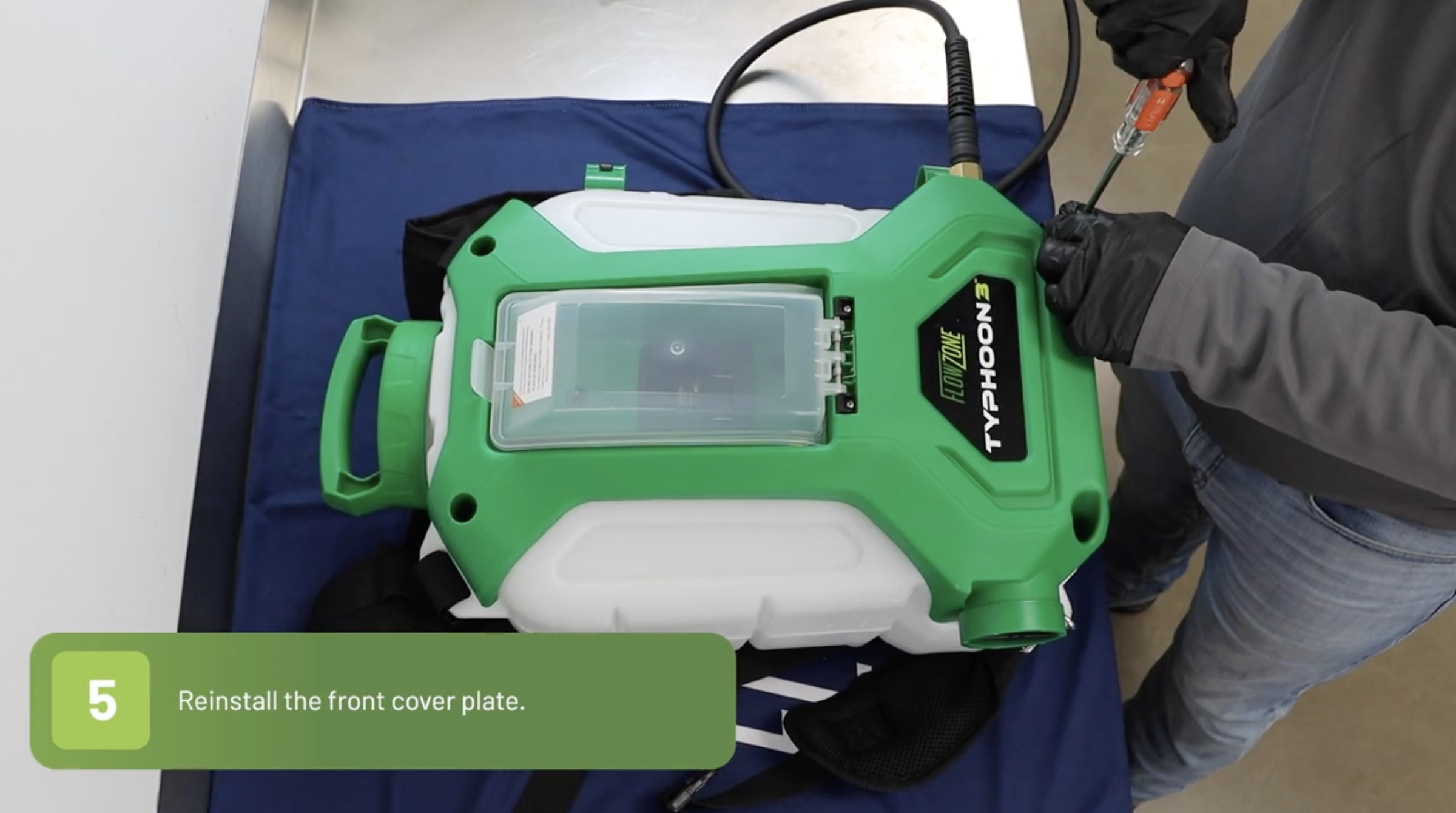 Once troubleshooting is complete, re-attach the front cover plate using the seven screws.
Was this article helpful?
That’s Great!
Thank you for your feedback
Sorry! We couldn't be helpful
Thank you for your feedback
Feedback sent
We appreciate your effort and will try to fix the article